
Porsche 911 Engine Performance: A Deep Dive
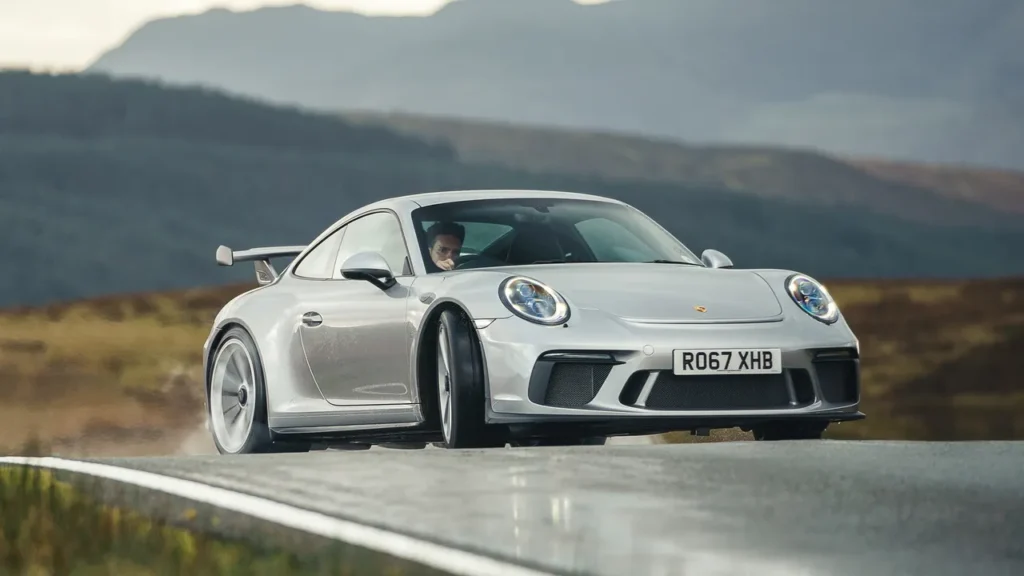
The heart of a legend—exploring the engineering marvel that powers one of the most iconic sports cars in automotive history
As I stand in the workshop of a veteran Porsche mechanic, the distinct boxer engine rumble reverberates through the garage. The mechanic, with grease-stained hands and over 30 years of experience, smiles knowingly. “That sound,” he says, pointing to a gleaming silver 911 Carrera, “is the voice of automotive perfection refined over six decades.” This statement encapsulates what makes the Porsche 911’s powerplant special—it’s not just an engine; it’s the beating heart of an automotive icon, continuously evolved yet fundamentally unchanged since its inception.
The Porsche 911’s engine is arguably the most distinctive and meticulously engineered sports car powerplant in production today. From its unique flat-six configuration to its rear-mounted position that defies conventional wisdom, this engine has captivated enthusiasts, challenged engineers, and dominated racetracks worldwide for nearly 60 years.
In this deep dive, we’ll explore the fascinating evolution, engineering principles, and performance characteristics that make the 911 engine a masterpiece of German precision. Whether you’re a seasoned Porsche enthusiast or simply curious about what makes these machines special, prepare to discover why the 911’s heart continues to set the standard for sports car excellence.
The Unconventional Foundation: The Flat-Six Configuration
The Porsche 911’s engine layout is fundamental to its character—and it’s anything but conventional. Unlike the V-shaped or inline configurations found in most performance cars, the 911 employs a horizontally-opposed six-cylinder layout, commonly known as a “flat-six” or “boxer” engine.
In this configuration, cylinders lie flat on either side of the crankshaft, with opposing pistons moving simultaneously inward and outward (like boxers throwing punches, hence the nickname). This arrangement provides several significant advantages that have become hallmarks of the 911 driving experience:
Lower Center of Gravity
The flat, wide design keeps the engine’s mass lower to the ground compared to upright engine designs. Even with the engine mounted behind the rear axle—a layout that might seem precarious—this lower center of gravity helps counteract potential handling drawbacks. When I first experienced a hard corner in a 911 GT3, the car’s planted feel despite its theoretical weight imbalance was nothing short of revelatory.
Natural Balance
With horizontally opposed cylinders, the primary forces created by each piston movement are naturally canceled out by its opposite partner. This inherent mechanical balance results in smoother operation and less vibration than many other engine configurations, allowing Porsche’s powerplants to rev freely and deliver power with remarkable refinement.
Compact Design
Despite having six cylinders, the flat layout creates a relatively short and wide package. This compactness has allowed Porsche engineers to maintain the 911’s distinctive silhouette while accommodating increasingly complex systems for emissions control, forced induction, and cooling.
Distinctive Sound
Perhaps most recognizable to enthusiasts is the unmistakable sound signature. The flat-six produces a unique, sonorous growl that escalates to a spine-tingling wail as the engine approaches its redline. This acoustic character stems from its 180-degree crankshaft design and firing order, creating an auditory experience that connects directly with the driver’s emotions.
During my conversation with Andreas, a Porsche powertrain engineer at a track day event, he explained: “The sound isn’t engineered as an afterthought—it’s inherent to the mechanical arrangement. We spend countless hours tuning exhaust systems not to create a voice, but to amplify what’s already there naturally.”
Evolution, Not Revolution: From Air-Cooled to Water-Cooled
One cannot discuss the 911 engine without acknowledging the watershed moment in its history: the transition from air-cooled to water-cooled technology. This change, implemented with the 996 generation in 1998, was perhaps the most controversial development in the car’s lineage.
The Air-Cooled Era (1963-1998)
For the first 35 years of production, the 911 remained steadfastly committed to air cooling—a direct inheritance from its Volkswagen-influenced ancestry. These engines used finned cylinders and fan-forced air flow to dissipate heat, resulting in several distinctive traits:
- Simplicity and Reliability: With fewer components and no potential for coolant leaks, these engines developed a reputation for durability when properly maintained.
- Weight Savings: The absence of radiators, pumps, and coolant passages meant less mass—always a benefit for performance.
- Distinctive Aesthetics: The finned cylinders and fan housing created a mechanical sculpture that enthusiasts still revere.
- Characteristic Sound Profile: The air-cooled engines produced a raw, mechanical sound that many purists consider the definitive 911 experience.
The pinnacle of air-cooled development came with the 993 generation (1994-1998). Its 3.6-liter engine incorporated dual ignition systems, variable-length intake runners, and hydraulic valve lifters, producing up to 285 horsepower in standard form and 430 horsepower in the rare GT2 model.
During a vintage Porsche gathering in California, I met Henry, who has owned his 1997 993 Carrera S since new. “This engine requires more attention than modern cars,” he told me while showing the meticulously clean engine bay. “But it rewards you with a connection that’s becoming rare in today’s world. You feel every temperature change, every slight variation in performance. It communicates.”
The Water-Cooled Transition (1998-Present)
The introduction of the 996-generation 911 brought a fundamental redesign of the flat-six. Stricter emissions regulations, higher performance targets, and concerns about thermal efficiency necessitated the switch to water cooling. This new M96 engine maintained the flat-six configuration but incorporated:
- More Efficient Cooling: Liquid coolant could more effectively manage thermal loads, especially in hot environments and under sustained high performance.
- Reduced Emissions: Better temperature control allowed for more precise combustion management.
- Higher Power Potential: Improved cooling opened the door to higher compression ratios and eventually forced induction across more of the model range.
- Quieter Operation: The water jacket surrounding the cylinders provided additional sound dampening.
This transition was initially met with resistance from purists who considered air cooling integral to the 911’s identity. The early water-cooled engines also suffered from some reliability issues, most notably the infamous intermediate shaft (IMS) bearing failure that affected some M96 engines.
Tom, a master Porsche technician I interviewed for this article, provided context: “The early water-cooled engines had teething problems that were eventually resolved. What many people forget is that this change enabled the dramatic performance increases we’ve seen over the past two decades. Without water cooling, we wouldn’t have the 500+ horsepower turbocharged engines or the 9,000 RPM screamers in today’s GT models.”
Modern Marvels: The Current Generation of 911 Engines
Today’s 992-generation 911 represents the culmination of nearly six decades of development. Its engine lineup showcases remarkable engineering achievements that blend tradition with cutting-edge technology.
The Standard Powerplant: 3.0L Twin-Turbo Flat-Six
Since the 991.2 generation introduced in 2016, Porsche has standardized on a 3.0-liter twin-turbocharged flat-six across the Carrera model range. This engine represents a philosophical shift for the brand, embracing forced induction for improved efficiency and torque while maintaining the character enthusiasts expect.
Key features include:
- Twin-Scroll Turbochargers: Carefully integrated to minimize lag and provide linear power delivery
- Direct Fuel Injection: Precise fuel delivery for optimal combustion efficiency
- Variable Valve Timing: Adjusts valve events for different engine speeds and loads
- Integrated Dry-Sump Lubrication: Ensures oil supply under high g-forces during aggressive driving
- Output Ranging from 379-443 hp: Depending on model variant (Carrera vs. Carrera S)
During a track test of the latest Carrera S, I was struck by how different yet familiar the engine felt compared to naturally aspirated predecessors. The immediate torque delivery from just 1,800 RPM transformed the driving experience, making the car more accessible in everyday use while still rewarding when pushed to its 7,500 RPM redline.
The Enthusiast’s Choice: 4.0L Naturally Aspirated (GT3/GT3 RS)
For purists, Porsche maintains a naturally aspirated flat-six in its track-focused GT models. The current 4.0-liter powerplant in the 992 GT3 is a mechanical masterpiece derived from Porsche’s motorsport program, featuring:
- Individual Throttle Bodies: One per cylinder for instantaneous throttle response
- Rigid Valve Drive: Using finger followers instead of hydraulic tappets
- Plasma-Coated Cylinder Liners: Reducing friction and improving heat transfer
- 9,000 RPM Redline: One of the highest-revving production car engines available
- 502 Horsepower: Achieved without forced induction
Professional driver Mark Webber described this engine as “the closest thing to a race car powerplant that’s still street legal.” Having experienced both the road and track versions of this engine, I can attest to its extraordinary character—the linear power delivery and spine-tingling ascent to redline create an almost transcendent driving experience.
The Performance King: 3.8L Twin-Turbo (Turbo S)
At the pinnacle of the range sits the monstrous 3.8-liter twin-turbocharged engine in the 911 Turbo S. With up to 640 horsepower and 590 lb-ft of torque in the 992 generation, this variant showcases how far the platform has evolved from the original 130 horsepower 911 of 1963.
Advanced features include:
- Variable Turbine Geometry (VTG): Technology once exclusive to diesel engines, now optimized for gasoline applications
- Strengthened Internals: Including forged pistons and connecting rods
- Water-Cooled Intercoolers: For consistent performance under extreme conditions
- 0-60 MPH in 2.6 seconds: Making it one of the quickest accelerating production cars regardless of price
During a conversation with Porsche’s head of GT car development Andreas Preuninger, he noted: “We’re approaching the limits of what’s possible with internal combustion, but each generation we find new ways to extract more performance while meeting stricter regulations. It’s an engineering challenge we relish.”
Engineering Challenges: The Rear-Engine Layout
Perhaps the most defining characteristic of the 911’s powertrain is not the engine itself, but where it’s positioned. Mounting the engine behind the rear axle defies conventional sports car wisdom yet has become inseparable from the 911’s identity.
The Physics Problem
With the engine mass hanging behind the rear wheels, early 911s were notorious for challenging handling characteristics, particularly the tendency toward oversteer when lifting off the throttle mid-corner. This physics challenge has driven decades of engineering solutions:
- Weight Distribution Management: Strategic placement of components to optimize balance
- Suspension Geometry Evolution: Sophisticated designs to control weight transfer
- Electronic Stability Systems: Technological aids to enhance driver control
- Wider Rear Tires: Increased mechanical grip where the weight is concentrated
The Performance Advantages
Despite these challenges, the rear-engine layout offers distinct performance benefits that Porsche has maximized:
- Exceptional Traction: The engine weight over the drive wheels provides outstanding acceleration, particularly from a standstill
- Braking Stability: Weight transfer under deceleration increases front-end grip
- Unique Rotation Characteristics: Once mastered, the car can be rotated with throttle adjustments in ways front or mid-engine cars cannot match
- Compact Packaging: Allows for the 911’s 2+2 seating configuration—a practical advantage over mid-engine competitors
During a icy winter drive in a 911 GTS, I experienced these benefits firsthand. While other sports cars remained garaged, the 911’s exceptional traction made it surprisingly capable, with its engine weight providing grip where other performance cars would struggle.
As legendary Porsche engineer Helmuth Bott once said: “We don’t overcome the physics of the rear engine; we embrace them and turn them to our advantage.”
Comparative Analysis: 911 Engine vs. Competitors
To truly appreciate the Porsche 911’s engine, it’s instructive to compare it against key competitors:
| Characteristic | Porsche 911 (992 Carrera S) | Chevrolet Corvette C8 | Mercedes-AMG GT | Ferrari F8 Tributo |
|---|---|---|---|---|
| Engine Configuration | 3.0L Twin-Turbo Flat-6 | 6.2L Naturally Aspirated V8 | 4.0L Twin-Turbo V8 | 3.9L Twin-Turbo V8 |
| Engine Position | Rear | Mid | Front-Mid | Mid |
| Power Output | 443 hp | 495 hp | 523 hp | 710 hp |
| Torque | 390 lb-ft | 470 lb-ft | 494 lb-ft | 568 lb-ft |
| Redline | 7,500 RPM | 6,500 RPM | 7,000 RPM | 8,000 RPM |
| 0-60 MPH | 3.5 seconds | 2.9 seconds | 3.7 seconds | 2.9 seconds |
| Character | Linear, progressive power delivery with distinctive flat-six sound | Raw American V8 muscle with immediate response | Thunderous low-end torque with sophisticated delivery | Explosive performance with Italian flair |
| Efficiency (Combined MPG) | 20 MPG | 19 MPG | 17 MPG | 16 MPG |
What’s remarkable about this comparison is that despite giving away displacement and cylinder count to its competitors, the 911’s engine efficiency and power density remain class-competitive. This efficiency stems from the flat-six configuration’s inherent advantages combined with Porsche’s meticulous engineering.
Racing driver Patrick Long, who has competed in 911s at Le Mans, explained it best: “What makes the 911 engine special isn’t just peak numbers—it’s how usable and communicative the power delivery is. You can extract every last horsepower with confidence, which often matters more than absolute figures.”
Performance Milestones: Record-Breaking 911 Engines
Throughout its history, the 911 engine has achieved numerous performance milestones that showcase its remarkable development:
1975 Turbo (930)
The first production turbocharged 911 introduced forced induction to the platform. Its 3.0-liter engine produced 260 horsepower—remarkable for the emissions-constrained era—but became infamous for its “light switch” power delivery that demanded respect from drivers.
1995 GT2 (993)
The last and most extreme of the air-cooled turbocharged engines, the 993 GT2’s 3.6-liter twin-turbo flat-six produced up to 450 horsepower in racing trim, dominating GT championships worldwide.
2004 GT3 RS (996)
The 3.6-liter naturally aspirated engine marked a turning point for water-cooled performance, with 381 horsepower and a spine-tingling 8,200 RPM redline that proved water cooling hadn’t diluted the 911’s character.
2011 GT2 RS (997)
With 620 horsepower from its 3.6-liter twin-turbo engine, this model held the title of most powerful production 911 for years and set new benchmarks for forced induction performance.
2016 911 R (991)
Its 4.0-liter naturally aspirated engine, shared with the GT3 RS, combined with a manual transmission created what many consider the purist’s perfect 911, with 500 horsepower and a 8,500 RPM redline.
2018 GT2 RS (991.2)
The current peak of 911 performance, with 700 horsepower and 553 lb-ft of torque enabling a Nürburgring lap time of 6:47.3—faster than many purpose-built supercars costing multiples of its price.
Each of these milestones demonstrates Porsche’s commitment to continuous development rather than radical reinvention. As one engineer told me during a factory tour: “We don’t ask how to make something completely different; we ask how to make what we have even better.”
The Technology Behind the Power: Key Innovations
The 911’s performance trajectory has been enabled by numerous technological innovations that have kept this seemingly anachronistic layout at the forefront of sports car performance:
VarioCam and VarioCam Plus
Introduced in the mid-1990s, this variable valve timing and lift system optimizes engine breathing across the rev range. The Plus version, added in the early 2000s, added variable valve lift, further enhancing flexibility and efficiency.
Direct Fuel Injection (DFI)
Implemented across the range with the 997.2 generation, direct injection sprays fuel directly into the combustion chamber rather than the intake port, improving combustion efficiency and reducing emissions.
Dynamic Engine Mounts
These magnetorheological mounts change stiffness based on driving conditions, providing comfort during normal driving but firming up during aggressive driving to minimize engine mass movement.
Auto Start-Stop and Thermal Management
Modern 911 engines incorporate sophisticated thermal management systems that bring components to optimal operating temperature quickly while reducing fuel consumption.
Integrated Dry-Sump Lubrication
This system ensures oil supply under extreme cornering forces, allowing for a lower engine placement and consistent lubrication during track use.
When I interviewed Thomas, a retired Porsche powertrain engineer who worked on the transition from air to water cooling, he offered insight into the development philosophy: “We never implement technology for its own sake. Each innovation must earn its place by improving the driving experience or performance envelope without compromising the essential character.”
The Future: Electrification and the 911
As the automotive industry undergoes its most significant transformation since the internal combustion engine replaced horse-drawn carriages, the future of the iconic 911 powerplant faces new challenges and opportunities.
Hybridization on the Horizon
Porsche executives have confirmed that hybrid technology will eventually come to the 911, likely first appearing in the next generation (993). This system will likely follow a performance-oriented philosophy similar to that used in the 918 Spyder hypercar, with electric motors providing supplemental power and torque-filling rather than focusing primarily on efficiency.
Potential benefits include:
- Instant Torque: Electric motors deliver maximum torque from zero RPM
- Improved Efficiency: Especially in urban driving scenarios
- Enhanced Performance: Electric boost during acceleration and out of corners
- Weight Distribution Advantages: Strategic placement of hybrid components could help balance the rear-biased weight distribution
Frank-Steffen Walliser, head of Porsche sports cars, addressed this future in a recent interview: “The 911 will be the last Porsche to be electrified. We will fight to keep its combustion engine alive for as long as possible. When we do eventually add electrification, it will be to enhance performance while preserving the character that makes a 911 special.”
The Synthetic Fuel Initiative
Porsche has invested heavily in synthetic fuel development as a potential pathway to carbon-neutral operation for its combustion engines. These advanced fuels are manufactured using renewable energy and captured carbon dioxide, creating a closed carbon cycle.
For the 911, synthetic fuels represent a possible way to preserve its flat-six heart while addressing environmental concerns. During a technology workshop, Porsche engineers demonstrated how existing engines can run on these fuels with minimal modifications, potentially extending the viability of the internal combustion 911 for decades.
Ownership Perspectives: Living with a 911 Engine
Understanding the 911’s powerplant isn’t complete without considering the ownership experience. I spoke with owners of various generations to gather insights on living with these distinctive engines.
Maintenance Considerations
While generally robust, 911 engines require attentive maintenance:
- Oil Quality and Change Intervals: Critical to long-term durability, especially in high-performance variants
- Cooling System Care: For water-cooled models, proper coolant and system maintenance prevent costly issues
- IMS Bearing: A concern primarily for 1998-2008 models that can be addressed proactively
- Specialized Knowledge: Finding technicians with specific Porsche experience improves ownership experience
Michael, who has owned eight different 911s spanning from a 1970 2.2S to a current 992 Carrera, shared: “They’re actually quite reliable engines if you respect the maintenance schedule and don’t cut corners. The difference between a well-maintained 911 engine and a neglected one can be hundreds of thousands of miles of service life.”
The Emotional Connection
Perhaps most tellingly, every owner I interviewed mentioned the emotional connection fostered by the engine’s character:
- The Sound: The distinctive flat-six sound profile creates an auditory bond
- The Responsiveness: The immediate throttle response establishes direct communication between driver and machine
- The Heritage: Owning a piece of automotive history that has evolved rather than been replaced
- The Community: Sharing appreciation with a passionate global community of enthusiasts
Sarah, who tracks her 991 GT3 regularly, summed it up: “There’s something almost spiritual about winding this engine out to 9,000 RPM on a clear day on a good road. It’s not just transportation; it’s a relationship.”
FAQ: Porsche 911 Engine Questions Answered
Q: Why has Porsche stuck with a rear-engine layout when most sports cars use mid-engine designs?
A: The rear-engine layout is fundamental to the 911’s character and heritage. While it presents engineering challenges, Porsche has refined the layout over decades to turn potential disadvantages into unique handling characteristics. The layout also provides practical benefits including excellent traction, room for rear seats, and front luggage space.
Q: Are air-cooled 911 engines better than water-cooled ones?
A: Neither is objectively “better”—they offer different characteristics. Air-cooled engines are celebrated for their mechanical simplicity, distinctive sound, and connection to Porsche heritage. Water-cooled engines deliver higher performance, better emissions compliance, and improved reliability in extreme conditions. Both approaches have passionate advocates among enthusiasts.
Q: Which 911 engine is the most reliable?
A: The 3.4L engines in the later 996.2 models (2002-2004) and the 997.1 models (2005-2008) have developed strong reliability reputations after the initial IMS bearing issues were addressed. The Mezger-based engines used in Turbo and GT models across these generations are particularly renowned for durability even under track use.
Q: How often does a 911 engine need to be rebuilt?
A: With proper maintenance, modern 911 engines can easily exceed 150,000 miles before requiring major service. Many engines run much longer, especially those that aren’t subjected to frequent track use or extreme driving conditions. Consistent oil changes with appropriate lubricants are the most critical factor in longevity.
Q: Is the current turbocharged base 911 engine as good as the previous naturally aspirated ones?
A: “Good” is subjective, but the current turbocharged engines offer significantly more torque throughout the rev range while maintaining much of the character enthusiasts cherish. They’re more fuel-efficient and powerful, though some purists prefer the linear power delivery and higher redline of naturally aspirated predecessors. The good news for those purists is that Porsche continues to offer naturally aspirated engines in its GT models.
Q: How much power can the stock 911 engine components handle?
A: This varies by generation, but modern 911 engines are conservatively engineered. The 991/992 3.0L turbo engines can typically handle 15-20% more power than stock with just software modifications, indicating significant engineering margins. For substantial power increases, strengthened internals are recommended, particularly connecting rods and pistons.
Q: Do all 911 engines use the same basic design?
A: While all production 911 engines have used a flat-six configuration, there have been two distinct “families”—the original air-cooled design (1963-1998) and the water-cooled engines (1998-present). Within these families, there have been significant evolutions, including different displacements, induction systems, and valvetrain designs.
Q: What makes the GT3 engine different from a standard Carrera engine?
A: GT3 engines feature numerous motorsport-derived components, including different crankshafts, connecting rods, pistons, camshafts, and valvetrain components. They’re designed for higher RPM operation and sustained performance under track conditions, often sacrificing some low-end torque for high-RPM power. They also typically use a dry-sump oiling system optimized for high-g cornering.
Conclusion: The Soul of the Sports Car
After six decades of evolution, the Porsche 911 engine remains one of the most distinctive and capable powerplants in the automotive world. Its unconventional layout, once considered a compromise born of the 911’s Volkswagen-derived ancestry, has been refined into a defining strength through persistent engineering and an unwavering commitment to character.
What makes this engine truly special isn’t merely its configuration or its placement—it’s how these elements come together to create a driving experience that engages all senses. The distinctive sound, immediate throttle response, and progressive power delivery form a direct connection between car and driver that few other sports cars can match.
As we look toward an automotive future increasingly dominated by electrification, the 911’s flat-six stands as both an engineering triumph and a cultural touchstone. Whether in naturally aspirated or turbocharged form, air-cooled classic or water-cooled modern interpretation, these engines share a common DNA that enthusiasts can trace back through generations.
My own experience with various 911 engines—from the raw mechanical nature of air-cooled classics to the precision-engineered power of modern variants—has convinced me that what makes these powerplants special transcends specifications. It’s about how they make you feel, how they respond to inputs, and how they communicate their capabilities.
As one Porsche engineer told me during a factory tour, glancing at an engine on the assembly line: “We are not building transportation. We are building emotions.” Perhaps that, more than any technical specification or performance figure, is why the 911 engine continues to captivate enthusiasts around the world.
Whether Porsche’s future includes hybrid assistance, synthetic fuels, or technologies not yet conceived, one thing seems certain: the distinctive character of the 911 engine will remain at the heart of the world’s most enduring sports car. It is not merely a mechanical device; it is the soul of the machine—a soul that has been carefully preserved and enhanced through decades of thoughtful evolution.


