
The Porsche 911 Targa: A Unique Blend of Coupe and Cabriolet
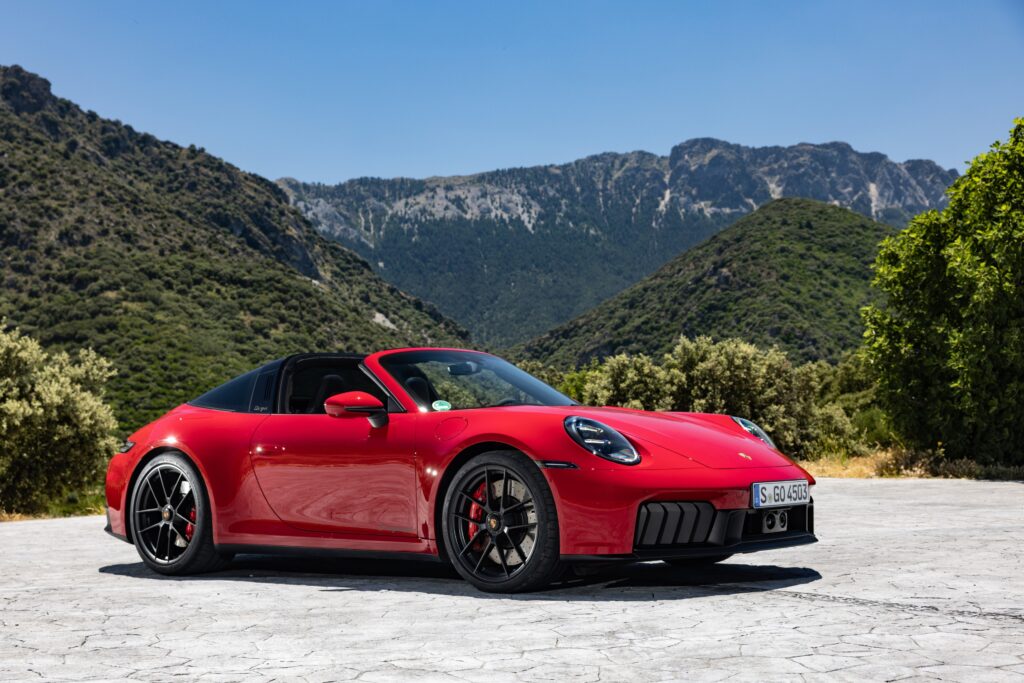
Introduction: The Unconventional Icon
The automotive world is filled with compromises. Designers and engineers constantly balance performance against practicality, aesthetics against aerodynamics, tradition against innovation. Yet occasionally, a vehicle emerges that refuses to settle, instead creating something entirely new. The Porsche 911 Targa stands proudly as one such creation—a car that for nearly six decades has defied conventional categorization by blending the structural integrity of a coupe with the open-air freedom of a cabriolet.
When the original Targa debuted in 1967, it represented Porsche’s innovative response to anticipated U.S. safety regulations that threatened to ban full convertibles. The resulting design—featuring a removable roof section and distinctive roll bar—created not just a compromise but a third way, a unique identity that has since become one of the most recognized silhouettes in automotive history.
Today’s 911 Targa continues this tradition of elegant problem-solving, having evolved through eight generations while maintaining its core identity. It remains the thinking person’s open-top sports car—a vehicle for those who appreciate nuance, engineering ingenuity, and the subtle art of having it both ways.
In this exploration, we’ll dive deep into the Targa’s rich heritage, its technical evolution, driving characteristics, cultural significance, and future prospects. Whether you’re a dedicated Porsche enthusiast or simply curious about this distinctive branch of the 911 family tree, join me on a journey through the fascinating world of the car that turned a safety regulation into an enduring icon of automotive design.
The Genesis: How Safety Regulations Birthed an Icon
The Regulatory Challenge
The mid-1960s marked a turbulent period for automotive manufacturers, especially those exporting to the United States. The National Highway Traffic Safety Administration (NHTSA) was considering stringent new rollover protection standards that threatened to eliminate traditional soft-top convertibles entirely. For Porsche, with its popular 356 Cabriolet, this presented an existential challenge to a significant segment of its business.
Rather than simply abandoning the open-air driving experience that many customers cherished, Porsche’s engineers took a characteristic approach: they innovated their way around the problem. The solution they devised would not only meet potential regulatory requirements but would create an entirely new category of sports car.
The Origin of the Name
The term “Targa” itself speaks to Porsche’s racing heritage, borrowed from the legendary Targa Florio race in Sicily—a punishing road event that Porsche had dominated throughout the early 1960s. In Italian, “targa” means “plate” or “shield,” aptly describing the distinctive stainless steel roll bar that became the design’s signature element. This naming choice connected the new model to Porsche’s competition pedigree while highlighting its most distinctive visual feature.
The 1967 Debut: Revolution Through Design
When the first 911 Targa was unveiled at the 1967 Frankfurt Motor Show, it presented a revolutionary concept: a removable roof panel above the front seats, a fixed glass rear window, and most distinctively, a brushed stainless steel roll bar that Porsche dubbed the “safety bar.”
The early Targa featured a zip-out plastic rear window, making it somewhat similar to a full convertible when both the roof panel and rear window were removed. However, this configuration proved less than ideal in practice—the plastic window was prone to discoloration and the setup was rather cumbersome. By 1969, Porsche had refined the design, introducing a fixed glass rear window that would become a Targa trademark.
What’s remarkable about the initial Targa design is how many of its fundamental elements have remained consistent through eight generations of the 911. While the mechanics of the roof system and the aesthetics of the roll bar have evolved dramatically, the basic concept—a removable center section with distinctive roll hoop—has proven enduringly appealing.
The original safety-driven compromise had, almost accidentally, created something with lasting aesthetic and practical appeal. It offered open-air enjoyment without the structural compromises of a full convertible, greater security, and all-weather capability with a distinctive look that set it apart from both coupes and traditional convertibles.
Evolution Through the Generations: From Simple Solution to Technical Marvel
Early Years: The Classic Targa (1967-1989)
The first-generation Targa established the template, but it was through the long-running G-series 911 (1974-1989) that the Targa truly found its audience and refined its identity. During this period, the Targa’s stainless steel roll bar became wider and more substantial, evolving into a distinctive styling element rather than merely a safety feature.
These early Targas required manual removal and storage of the roof panel—a process that demanded some effort and planning. The owner would need to unclamp the panel, carefully remove it, and find somewhere to store it (often in specialized brackets in the front trunk). While not particularly convenient by modern standards, this ritual became part of the Targa ownership experience, a hands-on interaction with the car’s unique architecture.
The air-cooled generations of the Targa maintained remarkable consistency in their fundamental design approach. Through the 964 generation (1989-1994) and into the 993 (1995-1998), the stainless steel roll bar and removable roof panel remained defining characteristics, though with gradually improving seals, materials, and operation.
The Sliding Glass Era: 996 and 997 (1999-2012)
With the controversial shift to water-cooled engines and the “fried egg” headlights of the 996 generation came an equally dramatic reinvention of the Targa concept. Gone was the removable roof panel and distinctive roll bar. In their place, Porsche introduced an innovative sliding glass roof system that retracted beneath the rear window.
This approach preserved the 911’s iconic profile while offering a large opening roof. The complex glass mechanism added weight high in the chassis—not ideal for a sports car—but provided an airy, panoramic experience even when closed. The glass roof design continued through the 997 generation with refinements to the mechanism and sealing.
During this period, many Porsche purists felt the Targa had lost its way, becoming merely a 911 with a sunroof rather than a distinct model with its own character. The classic roll bar—perhaps the most recognizable Targa feature—had disappeared entirely. While engineering impressive, these sliding glass Targas represented a significant departure from the original concept.
Return to Form: The 991 and 992 Generations (2014-Present)
In a move that delighted traditionalists, the 991-generation 911 Targa, introduced in 2014, marked a triumphant return to the model’s roots. Porsche reintroduced the distinctive roll bar—now finished in silver with “Targa” lettering—and implemented a fully automatic roof system that spectacularly stowed the roof section behind the rear seats.
This modern interpretation combined classic Targa aesthetics with contemporary engineering. The entire rear glass section and roll bar lift up and back to swallow the roof panel in a mesmerizing mechanical ballet that takes just 19 seconds to complete. This can be done at speeds up to 30 mph—a far cry from the manual removal process of earlier generations.
The current 992-generation Targa, introduced in 2020, refines this approach further with subtle design tweaks and technical improvements. Available exclusively with all-wheel drive, the modern Targa balances heritage-inspired design with cutting-edge performance and technology.
Engineering Marvel: How the Modern Targa Works
The roof mechanism of the current 911 Targa represents a fascinating blend of engineering prowess, mechanical complexity, and seamless operation. Let’s break down the remarkable transformation that occurs when a driver activates the roof:
- Initialization: The process begins with sensors verifying adequate clearance around the vehicle. The rear deck lid, which includes the entire glass rear window and roll bar section, begins to lift upward and backward.
- Elevation Phase: Two powerful hydraulic actuators raise the entire rear section—a component weighing over 40 kg (88 pounds)—high above the rear of the car.
- Roof Retraction: The fabric-covered roof panel above the front seats unlocks and folds into a Z-pattern as it retracts.
- Stowage: The folded panel disappears completely into a compartment behind the rear seats.
- Return: The glass rear section and roll bar then gracefully return to their original position.
This elaborate choreography happens in less than 20 seconds—a testament to Porsche’s engineering excellence. The mechanism involves approximately 20 sensors, several control units, and multiple electric and hydraulic actuators working in perfect harmony.
The complexity of this system significantly increases the Targa’s weight and cost relative to both coupe and cabriolet variants. The roof mechanism adds approximately 110 pounds (50 kg) compared to the coupe, making the Targa the heaviest body style in the 911 lineup. This additional weight sits high in the chassis, theoretically compromising the car’s center of gravity.
Yet in typical Porsche fashion, engineers have compensated for these compromises through careful chassis tuning, ensuring the Targa delivers a driving experience worthy of the 911 badge despite its complex roof and additional weight.
Driving Experience: The Unique Character of the Targa
The Best of Both Worlds?
The Targa concept promises a dual-nature driving experience—the structural integrity and security of a coupe combined with much of the sensory openness of a convertible. But does the reality live up to this ideal?
In many ways, yes. With the roof closed, the modern Targa provides a nearly coupe-like experience with excellent noise insulation and a sense of security. The fixed roll bar and rear glass maintain much of the structural rigidity lost in full convertibles. Open the roof, and you’re treated to a rush of fresh air and unobstructed views skyward, though with less total exposure than a cabriolet.
One distinctive aspect of the Targa driving experience is the roll bar’s effect on airflow. While cabriolet owners often complain of buffeting at higher speeds, the Targa’s roll bar serves as an effective wind deflector, creating a more comfortable open-air experience even at highway speeds. This makes the Targa particularly well-suited to grand touring.
Handling Compromises?
Physics cannot be denied—the Targa’s additional weight and higher center of gravity do have some effect on absolute handling performance. In back-to-back comparisons with 911 coupes, the Targa typically exhibits slightly more body roll in corners and marginally slower responses to directional changes.
However, Porsche’s chassis tuning mitigates these effects impressively. The modern Targa comes standard with Porsche Active Suspension Management (PASM), which continuously adjusts damping forces based on road conditions and driving style. All current Targas also feature all-wheel drive, providing enhanced stability and traction.
For all but the most demanding drivers on the most challenging roads or tracks, the Targa’s handling compromises remain minimal—certainly less significant than those of the Cabriolet. The car still delivers the fundamental 911 experience: telepathic steering, phenomenal braking, and the unique dynamics of a rear-engine layout.
The Sensory Experience
Where the Targa truly distinguishes itself is in its sensory character. With the roof open, you experience a unique combination of exposure and protection. The sun and sky are immediately accessible, but the surrounding structure maintains a sense of cockpit-like intimacy missing in a full convertible.
Sound management is another Targa specialty. The model delivers a more immersive engine note than the coupe when the roof is open, thanks to fewer barriers between occupants and the flat-six behind them. Yet it avoids the sometimes overwhelming wind noise that cabriolets can generate at higher speeds.
This balanced sensory profile makes the Targa particularly appealing for spirited driving on beautiful roads—offering enough openness to connect with the environment without the complete exposure that can become fatiguing on longer journeys.
Targa Models Throughout History: The Highlights
1967 911 Targa 2.0
The original. With its removable roof panel, plastic rear window, and slender chrome roll bar, this model established the template. Powered by a 130 hp flat-six, it offered a unique alternative to both the coupe and the less rigid full cabriolet.
1974 911 Targa Carrera 2.7 RS
A rare and highly collectible variant, the Carrera 2.7 RS Targa combined the lightweight, high-performance RS package with the Targa body style. Only 34 were produced, making it one of the most sought-after Targas for collectors.
1989 911 Targa 3.2 Clubsport
The Clubsport package—with its stripped-down, performance-focused approach—made for an interesting contrast with the Targa body style, typically chosen for its versatility rather than ultimate performance. These rare variants combined seemingly contradictory aspects of the 911 philosophy.
1997 993 Targa
The last air-cooled Targa featured a large sliding glass roof rather than the traditional removable panel, marking a significant departure from the original concept. Despite losing the distinctive roll bar, these models have developed a following for combining the 993’s superb dynamics with an innovative roof solution.
2014 991 Targa 4S
The triumphant return to form. The 991 Targa reintroduced the distinctive roll bar and combined it with a fully automated roof mechanism. Its retro-inspired design with modern execution won widespread acclaim and reignited interest in the Targa variant.
2021 992 Targa 4S Heritage Design Edition
Limited to 992 examples worldwide, this special edition combines the modern Targa with styling elements from Porsche’s past, including Cherry Metallic paint, gold badges, and a heritage interior with corduroy seats. It represents the Targa’s evolution from engineering solution to style icon.
Collectibility and Investment Potential
Historical Value Trends
Historically, Targa models have occupied an interesting position in the collector market. For many years, they were less sought-after than coupes, with their additional complexity and weight seen as drawbacks among purists. This created something of a value proposition for enthusiasts—Targas often traded at discounts to equivalent coupes, despite their greater rarity in many model years.
This pattern has shifted significantly in recent years. As collector interest in distinctive, low-production variants has increased, many classic Targas have seen substantial appreciation. Early air-cooled Targas, particularly special editions or those in rare color combinations, have experienced some of the strongest growth in the 911 market.
Most Collectible Variants
Among the most collectible Targa models are:
- Early “soft-window” Targas (1967-1968) with their removable plastic rear windows
- Any Targa variant of limited production models like the Carrera RS
- The final air-cooled 993 Targas, which combine the desirable last air-cooled generation with the unique sliding roof mechanism
- The 997 Targa 4S in manual transmission, which represents a relatively rare combination
Future Classics
Looking toward the future, several current and recent Targa models show promise as appreciating assets:
- The 991 Targa GTS with manual transmission combines the desirable GTS specification with the increasingly rare manual gearbox
- The 992 Targa 4S Heritage Design Edition, with its limited production and distinctive styling elements
- Any Targa with unique factory specifications, special order colors, or rare option combinations
For collectors, Targas offer an appealing combination of the 911’s legendary driving dynamics and an instantly recognizable variation on its design. As automotive electrification accelerates, these distinctive expressions of traditional sports car design may well continue to appreciate.
Model Comparison: Coupe vs. Targa vs. Cabriolet
Targa vs. Coupe vs. Cabriolet: Key Differences
| Feature | 911 Coupe | 911 Targa | 911 Cabriolet |
|---|---|---|---|
| Structural Rigidity | Highest | Good | Lowest |
| Weight | Lightest (+0 lbs) | Heaviest (+110 lbs) | Heavy (+85 lbs) |
| Open-Air Experience | Fixed roof with sunroof option | Partial open-air with fixed roll bar | Full open-air experience |
| NVH (Noise, Vibration, Harshness) | Best insulation | Good with roof closed | Least insulated |
| All-Weather Capability | Excellent | Very good | Good |
| Roof Operation Time | N/A | 19 seconds | 12 seconds |
| Roof Operation Speed | N/A | Up to 30 mph | Up to 30 mph |
| Wind Buffeting When Open | N/A | Minimal | More pronounced |
| Trunk Space | Largest | Slightly reduced | Reduced when roof down |
| Price Premium (vs. Coupe) | Base price | +$19,300 | +$12,800 |
| Drivetrain Options | RWD or AWD | AWD only (current gen) | RWD or AWD |
| Legacy/Heritage Factor | Original 911 concept | Distinctive Porsche innovation | Traditional convertible |
Which 911 Variant is Right for You?
Choose the Coupe if:
- You prioritize absolute performance and handling
- You regularly participate in track days or competitive driving events
- You prefer the purest expression of the 911 concept
- You drive frequently in poor weather conditions
- You’re looking for the most affordable entry point into 911 ownership
Choose the Targa if:
- You want open-air driving with a distinct aesthetic
- You appreciate the unique heritage and visual identity
- You desire a blend of coupe-like rigidity with convertible-like openness
- You prefer grand touring to all-out track performance
- You’re drawn to the mechanical spectacle of the roof operation
- You drive frequently on scenic routes where the open-air experience enhances the journey
Choose the Cabriolet if:
- You want the most complete open-air experience
- You prefer the cleaner look without the roll bar
- You prioritize rapid transitions between open and closed configurations
- You’re willing to accept some additional chassis flex for maximum exposure
- You enjoy the traditional convertible aesthetic
The Cultural Impact: More Than Just a Car
Celebrity Connections
The 911 Targa has garnered a devoted following among celebrities and influencers who appreciate its distinctive character. Perhaps most notably, designer and film director Tom Ford has been frequently photographed in his black 1977 Targa. Fashion designer Ralph Lauren, known for his extraordinary car collection, has owned several significant Targas over the years.
In Hollywood, the Targa has made numerous appearances in films and television shows, often chosen to convey a specific character trait or lifestyle. Its distinctive silhouette makes it instantly recognizable even to non-enthusiasts, cementing its place in visual pop culture.
The Targa in Pop Culture
Beyond celebrity ownership, the Targa has appeared in various media that have reinforced its cultural position:
- In gaming, the Targa has featured prominently in racing simulators like Forza Motorsport and Gran Turismo, often highlighted for its unique combination of performance and style
- In architecture and design, the Targa’s distinctive roll bar has inspired elements in modern buildings and furniture, demonstrating its influence beyond automotive circles
- In fashion, the Targa aesthetic—particularly the contrast between the metal roll bar and the surrounding bodywork—has influenced designs in watches, sunglasses, and other accessories
Targa Communities
Like many distinctive Porsche variants, the Targa has inspired dedicated owner communities and events. The Targa Club International organizes regular gatherings specifically for Targa owners, while model-specific forums and social media groups foster connections between enthusiasts worldwide.
These communities often focus on the particular maintenance challenges and ownership experiences unique to the Targa, sharing solutions for roof mechanism issues and celebrating the model’s distinctive character. For many owners, this sense of community enhances the ownership experience, providing both practical support and social connection.
Ownership Experience: Practical Considerations
Maintenance Realities
Owning a 911 Targa brings specific maintenance considerations beyond those of the standard coupe. The roof mechanism—particularly in modern automatic versions—represents a complex system requiring occasional attention.
For classic manual-roof Targas, issues typically involve worn seals leading to water leaks, deterioration of the roof material, or mechanical wear in the clamping systems. These problems are generally straightforward, if sometimes costly, to address.
The sliding glass roof Targas (996 and 997 generations) can experience issues with their cable-driven mechanisms and sometimes develop leaks where the glass meets the bodywork. Parts availability remains good, though specialized knowledge is required for proper repairs.
Modern automatic Targas (991 and 992) present the greatest complexity, with numerous sensors, motors, and hydraulic components that can potentially fail. While Porsche’s engineering is generally robust, when problems do occur, diagnosis and repair typically require dealer intervention and can be expensive. Many owners opt for extended warranties specifically to cover the roof system.
Practical Livability
Despite these considerations, daily living with a Targa offers distinct pleasures. The roof can be operated at speeds up to 30 mph, allowing for spontaneous open-air driving when weather permits. The fixed rear glass provides better visibility than many convertibles with their restricted rear windows.
The Targa’s structure also offers practical advantages over the Cabriolet. The fixed roll bar provides a mounting point for additional speakers in the audio system, and many owners report less wind noise and buffeting at highway speeds compared to full convertibles.
Storage space remains a 911 strong point regardless of body style. The Targa’s roof mechanism intrudes slightly into the area behind the rear seats, but the front trunk remains identical to other 911 variants, easily accommodating weekend luggage or shopping.
Running Costs
Operating costs for Targa models typically run slightly higher than equivalent coupes due to:
- Marginally lower fuel efficiency from the additional weight (approximately 1-2 mpg difference)
- Higher insurance premiums reflecting the more complex roof system and potentially higher repair costs
- Additional maintenance related to roof seals, mechanisms, and weather protection
These incremental costs are generally modest in the context of overall 911 ownership expenses and are offset by potentially stronger residual values, particularly for well-maintained examples of desirable specifications.
Buying Guide: Finding Your Perfect Targa
What to Look For
When shopping for a classic Targa (pre-996):
- Check thoroughly for water leaks around all roof seals
- Ensure the roof panel fits properly and all locking mechanisms operate smoothly
- Look for corrosion around the roll bar mounting points, a common weak spot
- Verify the condition of the roof material and rear window
For sliding glass roof models (996-997):
- Test the roof mechanism through multiple cycles, listening for unusual noises
- Check for smooth operation and proper alignment when closed
- Inspect for water stains in the interior, particularly under the rear window area
- Verify all roof controls and position sensors function correctly
For modern automatic-roof Targas (991-992):
- Request documentation of any roof system service history
- Ensure the complex opening sequence operates flawlessly through multiple cycles
- Check for error messages in the vehicle’s information system
- Test all safety features, including the anti-pinch protection
Best Years and Configurations
For air-cooled enthusiasts:
- 1989-1994 (964 generation) offers a good balance of classic character with improved reliability
- Late G-series models (1987-1989) with G50 transmission provide the classic experience with better durability
For water-cooled buyers on a budget:
- Early 997 Targas (2006-2008) present good value with the improved styling over the 996
- Late 996 Targas (2002-2004) offer the most affordable entry point into Targa ownership
For those seeking modern performance:
- 991.2 Targa 4 GTS combines the retro-inspired Targa design with substantial performance
- 992 Targa 4S offers the latest technology with classic styling cues
Market Trends to Watch
As of 2025, several trends are shaping the Targa market:
- Rising prices for all air-cooled variants, particularly special editions and rare specifications
- Increasing interest in manual transmission examples as new Porsche models increasingly favor PDK
- Growing appreciation for the 996/997 sliding glass roof models, long considered the least desirable Targas
- Strong demand for low-mileage, well-optioned examples of the retro-styled 991/992 Targas
The Future of the Targa: Electric Horizons?
The Electric Question
As Porsche navigates the transition toward electrification, questions naturally arise about the future of the Targa concept. The company has confirmed that the next generation of the 911 will feature hybrid technology, but a fully electric 911 remains further in the future. How might these powertrain developments affect the Targa variant?
There are reasons to believe the Targa concept may translate particularly well to electrified platforms. Electric powertrains typically add weight to vehicles—a challenge the Targa has already addressed through its development history. The distinctive roof mechanism could serve as an even more important differentiator in an era when the soundtrack of the flat-six engine is diminished or absent.
Furthermore, the packaging flexibility offered by electric components could potentially allow for innovative approaches to the roof mechanism or even new interpretations of the Targa concept that preserve its essential character while embracing new technical possibilities.
Heritage in a Changing World
Porsche has demonstrated remarkable skill in evolving the 911 while maintaining its core identity. The Targa represents perhaps the clearest example of this evolutionary approach—a variant that has reinvented itself multiple times while remaining recognizably connected to its origins.
This suggests that whatever form future Targas take, they will likely maintain the distinctive roll bar and open-roof concept that have defined the model for nearly six decades. These elements have transcended their original functional purposes to become signature design features, too integral to the Targa identity to abandon.
As sports cars increasingly need to justify their existence in a world focused on practicality and environmental responsibility, distinctive variants like the Targa—with their emotional appeal and connection to automotive heritage—may become even more important to manufacturers like Porsche.
Conclusion: The Enduring Appeal of the Third Way
The Porsche 911 Targa represents something increasingly rare in the automotive world: a genuine third option. Neither coupe nor convertible, it charts its own course—one defined by distinctive design, innovative engineering, and a unique driving experience.
Born of regulatory necessity, the Targa has transcended its origins to become an enduring symbol of Porsche’s approach to problem-solving. Rather than simply meeting requirements, the company created something new and distinctive that has earned its place in automotive history through generations of thoughtful evolution.
For the fortunate few who experience Targa ownership, the rewards extend beyond mere transportation. There’s the mechanical theater of the roof mechanism, the distinctive aesthetics of the roll bar, and the carefully balanced open-air experience that connects driver to environment without overwhelming the senses.
In an era of increasing automotive homogenization, the Targa stands as a reminder that the most interesting solutions often emerge not from pursuing the obvious path but from reimagining the question itself. Neither completely open nor fully closed, the Targa continues to demonstrate that sometimes the most satisfying answer lies somewhere in between—in that thoughtfully engineered third way that has been the hallmark of Porsche design for nearly six decades.
Whether in its classic form with manually removable roof panel, its sliding glass incarnation, or its current automatically stowing configuration, the Targa remains a statement of individuality—a choice for those who appreciate nuance, engineering excellence, and the subtle art of having it both ways.
FAQ: Common Questions About the Porsche 911 Targa
What does “Targa” mean and why did Porsche choose this name?
“Targa” comes from the Italian word meaning “plate” or “shield,” and was inspired by the Targa Florio race in Sicily where Porsche had achieved numerous victories. The name was chosen to highlight the distinctive stainless steel roll bar that characterized the design while connecting it to Porsche’s racing heritage.
How is a Targa different from a regular convertible?
The Targa features a removable center roof section with a fixed roll bar and rear window, whereas a convertible (or cabriolet in Porsche terminology) has a fully retractable roof that stows behind the rear seats, leaving no roof structure visible when open. The Targa offers structural advantages over a full convertible while providing much of the open-air experience.
Are Targas less valuable than coupes?
Historically, Targa models often commanded lower prices than equivalent coupes in the secondary market. However, this trend has shifted in recent years, with many classic Targas now approaching or exceeding values of comparable coupes due to their distinctive character and relative rarity. Modern Targas (991 and 992 generations) typically command a significant premium over coupes when new.
Does the complex roof mechanism of modern Targas cause reliability issues?
While the modern Targa roof mechanism is indeed complex, Porsche’s engineering has proven generally reliable. When issues do occur, they typically involve sensors or control units rather than mechanical failures. Many owners report trouble-free operation throughout their ownership, though repair costs can be significant if problems arise outside of warranty.
Can I drive my Targa on track days?
Absolutely. While the Targa carries a slight weight penalty compared to the coupe, it retains most of the 911’s legendary handling characteristics. Many owners enjoy occasional track days with their Targas, though those focused primarily on track performance might prefer the structurally optimal coupe variant.
How weatherproof are classic Targas?
Early Targas were notorious for developing leaks as their seals aged. Proper maintenance and careful attention to the condition of weatherstripping can minimize these issues, but owners of classic Targas should expect occasional water ingress during heavy rainfall. Modern Targas (991/992) have dramatically improved weatherproofing when properly maintained.
Does the Targa roof mechanism affect cargo space?
The roof mechanism of modern Targas does intrude slightly into the area behind the rear seats, reducing storage space there compared to the coupe. However, the front trunk remains identical across all 911 variants, providing the same practical storage space regardless of body style.
Why are current Targas only available with all-wheel drive?
Porsche’s decision to offer the 991 and 992 Targas exclusively with all-wheel drive reflects their positioning as all-weather grand tourers rather than stripped-down performance models. The additional weight of the roof mechanism is also better complemented by the additional traction of all-wheel drive. For those seeking a rear-wheel drive open 911, the Cabriolet remains available in both drivetrain configurations.
How long does it take to operate the roof on modern Targas?
The roof operation on 991 and 992 Targa models takes approximately 19 seconds to complete and can be activated at speeds up to 30 mph. This compares to around 12 seconds for the Cabriolet’s roof operation.
Are there any special maintenance requirements for Targa models?
Targa owners should pay particular attention to the roof mechanism and seals. For classic models, regular lubrication of moving parts and inspection of weatherstripping is essential. Modern Targas benefit from following Porsche’s recommended service intervals, which include inspections of the roof system. Many owners also choose to operate the roof mechanism regularly (at least monthly) to prevent seals from setting and hydraulic components from stagnating.


